You know this scenario:
Your day runs unexpectedly long, your symptoms are flaring and you are wading through the Slog. You’ve long since used every spoon you have and then some. You need food but don’t have the oomph or willpower to prepare anything healthful. What do you do?
Do you follow the path of least resistance and gorge on calorie-dense, nutrition-poor snack foods? Buckle down to force your body past capacity to make that healthful food? Order take-out, even though it’s not really in your budget or helpful for your symptoms?
None of these options deserves moral judgment: in no-win situations, we have no good calls to make. But realistically, all these choices are liable to drive you further into energy debt and keep a vicious cycle going.
Zero spoon days happen. They are less likely to be no-win food days, though, if we face that truth squarely when we do have energy and prepare for them in advance.
We have created a new category on One Spoon Cooking for zero-spoon options. This first Zero-Spoon post features one of my vanlife favorites. It illustrates the kind of advance thinking and preparation I encourage—not daunting or complicated to prepare, easily adapted, easy to cook in a couple of ways. Alas, I would probably (wrongly!) have sneered at it while in my house, because I would (wrongly!) have associated it with bad backpacking food:
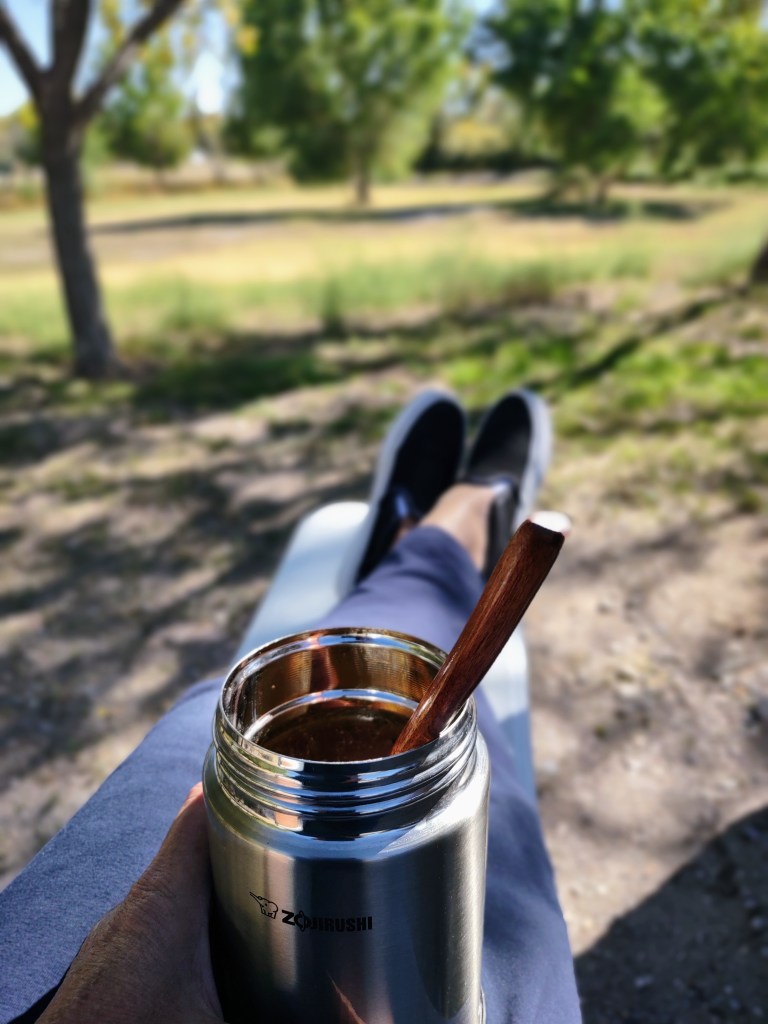
Thermos soup made with boiling water and dehydrated veggies and beans.
Oh, tell me you’re not sneering. Thermoses and dried veggies are great additions to your low-spoon toolkit.
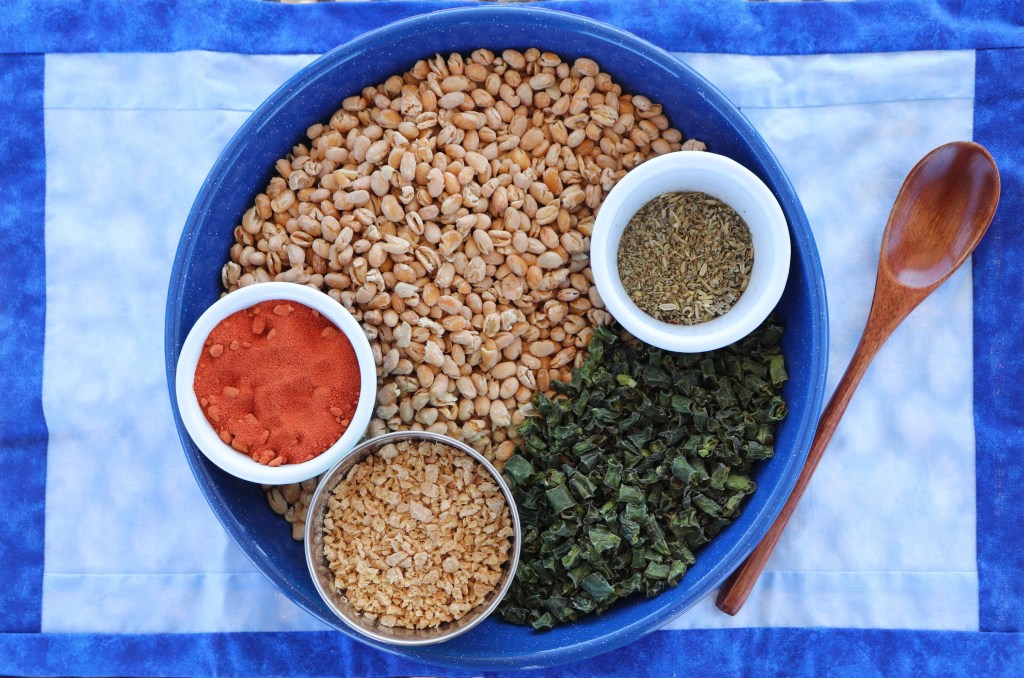
Advance planning: On a day when I have about half a spoon of spare energy (5 minutes to gather/put away ingredients, and 5 minutes to mix them), I make 6 servings of dry soup mix, with parboiled, dehydrated navy beans, dehydrated vegetables, and seasonings.
Zero spoon days: On a day I know will be exhausting, like my weekly travel and chore days, I add a serving of soup mix, olive oil, and boiling water to a thermos in the morning (zero spoons). On unexpected no-energy days I do the same at some point when I’m already up and about so I don’t waste energy making a special trip to the kitchen. At dinner time, when I most need some nutritious, hearty, comfort food, I have a delicious meal all ready to go (zero spoons).*
That is six zero-spoon meals, my friends, for half a spoon’s worth of energy in advance. That is a lot of flavor and nutrition bang for the effort buck.
I wish I had even thought of the humble thermos when I was still working or had my house. Thermoses are portable—I could have eaten a hot (or cold) meal between exhausting errands or doctor’s appointments. They are lightweight—I would not have had to lug the slow-cooker around my kitchen. Their vacuum-sealed, not-quite-boiling, slow-cooking environment concentrates flavors, which means more taste for less effort. My thermos is small enough to open without hurting my hands on higher pain days.
And dehydrated veggies—well. They will get their own post, because they have been game changers for me. But for now, suffice it to say that they have 90% of the nutrition of their fresh counterparts with no chopping. As long as you don’t expect any preserved food to act or taste like fresh (do you expect vodka to taste like a potato??), you can play to their strengths, and zero-spoon soup mixes are one of dehydrated veggies’ very great strengths.
I’ll share the recipe below as an example of proportions. So many of us have food sensitivities or special diets that recipes aren’t always much use among us. If the idea makes sense in your life, though, the recipe is here as a helpful framework for you to build on.
Tl;dr takeaways:
- Prepare ahead for inevitable zero-spoon days.
- Thermoses are lightweight, portable ways to cook hot zero-spoon foods.
- Dehydrated veggies make great zero-spoon soups.
What about you? What is one simple, low-effort thing you can do this week to set yourself up for a nutritional win on your next zero-spoon day? How might you make it a habit?
__________________
*At dinner time I could also just put the soup mix, oil, and water in a pot on the stove for 15 minutes. Physically that would still be zero spoons, but it would cost a mental spoon because I’d have to find the gumption to take action.
Zero Spoon Day Navy Bean Soup
(Note of caution: I never actually measure anything, so these are all estimates. But they’re close enough to give you the idea.)
Per serving:
1/4 C parboiled, dehydrated navy beans
1 T unflavored soy curls/TVP flakes
1 heaping T dehydrated green beans
1 scant T dehydrated spinach
1 heaping tsp. tomato powder
½ tsp. Italian seasoning or to taste
½ tsp. fennel seed
¼ tsp. black pepper
Salt to taste
Put everything together in a zip-lock bag and shake to mix. Sometimes I also add 1 T dry packed, julienne sliced sun-dried tomatoes per serving.
To prepare: Add ingredients to a 16-oz. vacuum-seal food jar with about 1 T olive oil and boiling water to fill the jar. I usually add garlic powder and sometimes chives just prior to serving, as thermos lids absorb garlic and onion odors too, too well. Cost: roughly $2.50-3.00 per serving.
 One Spoon Cooking