Every Thanksgiving I plan a “simple” holiday meal only to crash halfway through cooking it, because it wasn’t quite simple enough.
I’m tempted to skip the celebration, but holidays matter, just like good meals matter, even to solo cooks, the housebound, the ill. They remind us what we value; they allow us to share in our culture’s observances; they give us a chance to enjoy beautiful, once-a-year rituals.
But they’re a heck of a lot of work.
I normally downsize holidays: take the full, overwhelming shebang and reduce it to what I hope will be a manageable level with simpler recipes, fewer dishes, and more storebought items. But really, downsizing has never quite worked. Whatever I do is still more than I would typically do in a day–just washing the dishes, let alone cooking the meal. I end up overly tired and wondering whether next year I’ll even bother.
Downsizing also has negative undertones. You downsize by subtracting from something larger, and that can make me feel a little deprived–like what I’m doing is “less than” or second best, not what I would do if I were healthy. It can foreground the losses of illness.
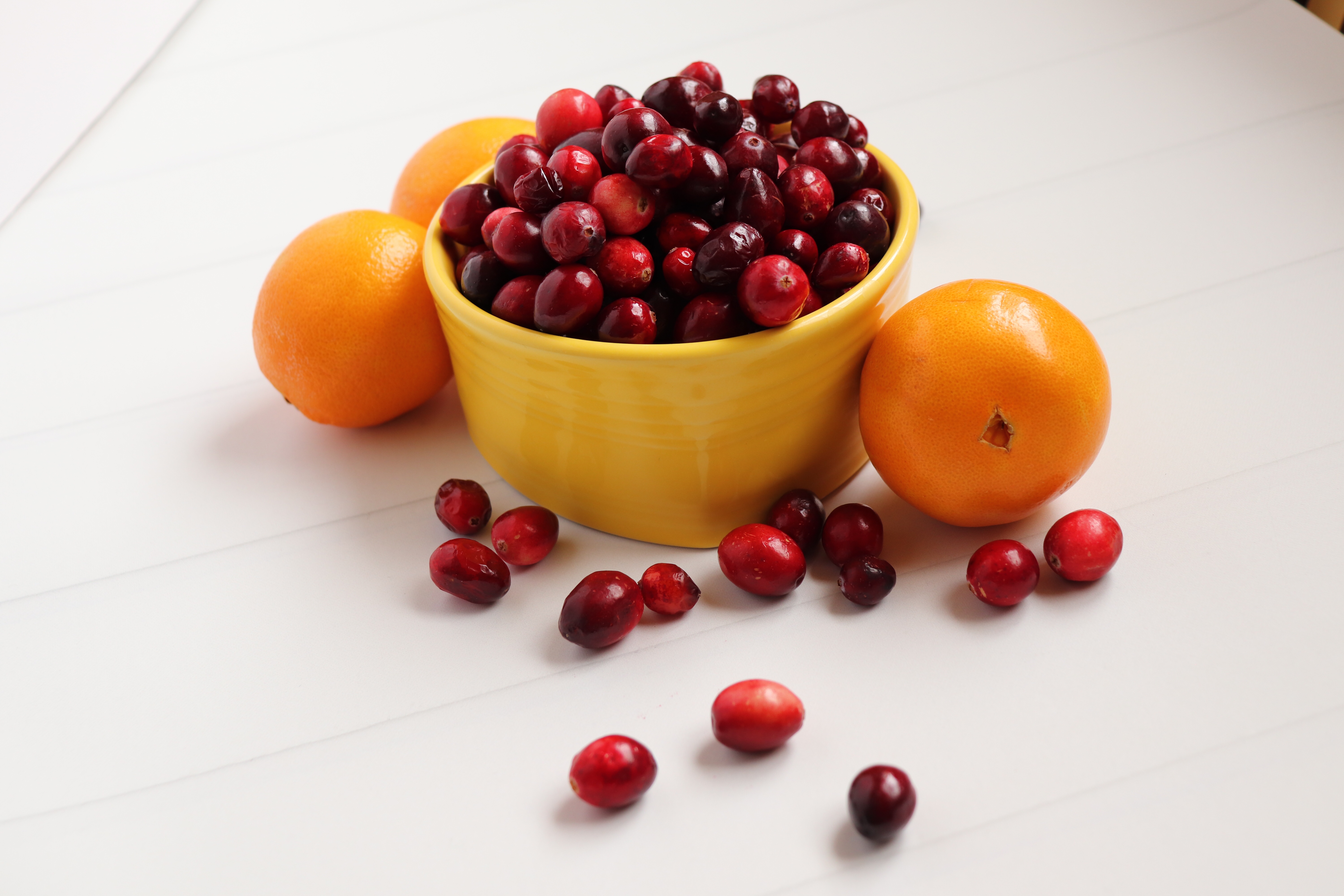
This year I’m going to experiment with upsizing instead. I will add just one thing to my regular fare to give my meals the flavor of holiday. For 2019 that one thing will be cranberry sauce. (In fact, I’m not really doing any extra cooking–in my normal menu rotation, Wednesday is already sauce-making day.)
I might make a traditional sauce, or this Cuban-influenced one with cocoa, orange, and lime; or a family-favorite “salsa” with dried cranberries, orange, pecans, and red chile powder. They are all good on everything from oatmeal to sandwiches to baked apples. I might just eat cranberry sauce at all three meals, because if I’m going to do such a simple thing, I can go over the top with it.
That’s the thing about upsizing, about addition: you feel like you’re going over the top. Upsizing focuses on gain rather than loss, on the plenty you have rather than what you are missing, on abundance rather than scarcity. What you do is “more than;” it is extra, bonus, gratuitous.
And that sense of gift, of gratuity, is a first big step toward gratitude.
In this series, I’ve explored “rolling food prep” as a strategy for pacing: preparing extras of one or two ingredients each time you cook, so that you prepare about half of each meal fresh and assemble the rest from previously prepared ingredients. Part 1 introduced the basic concept. Part 2 showed my typical weekly template for meal planning. Part 3 looked at how that template turned into a week’s menus.
In this final post we’ll consider some other strategies—ones that have real strengths but that did not work for me. Of course, they do work well for many—we all have different abilities, resources of time and money, and interest in food and cooking. I’m certainly not preaching against these strategies! But if you’re new to life with an energy-limiting condition, this post may save you some trial and error.
The Strategies
Batch cooking—making one huge meal on Saturdays, say, and eating the leftovers for the rest of the week. Batch cooking does make most of the week easy, but cooking day can be intense. If you have limited or highly variable energy, this may not work for you. On the other hand, if you are working, batch cooking can guarantee you a healthy meal even when you come home from work exhausted.
For me, cooking day was overwhelming, and by the fourth day of leftovers, I dreaded the food. If I didn’t have the energy to cook on the designated day, then I didn’t have meals prepared for the whole week—especially a problem if I had several low-energy days in a row. Lots of ingredients spoiled when I couldn’t get to them on time.
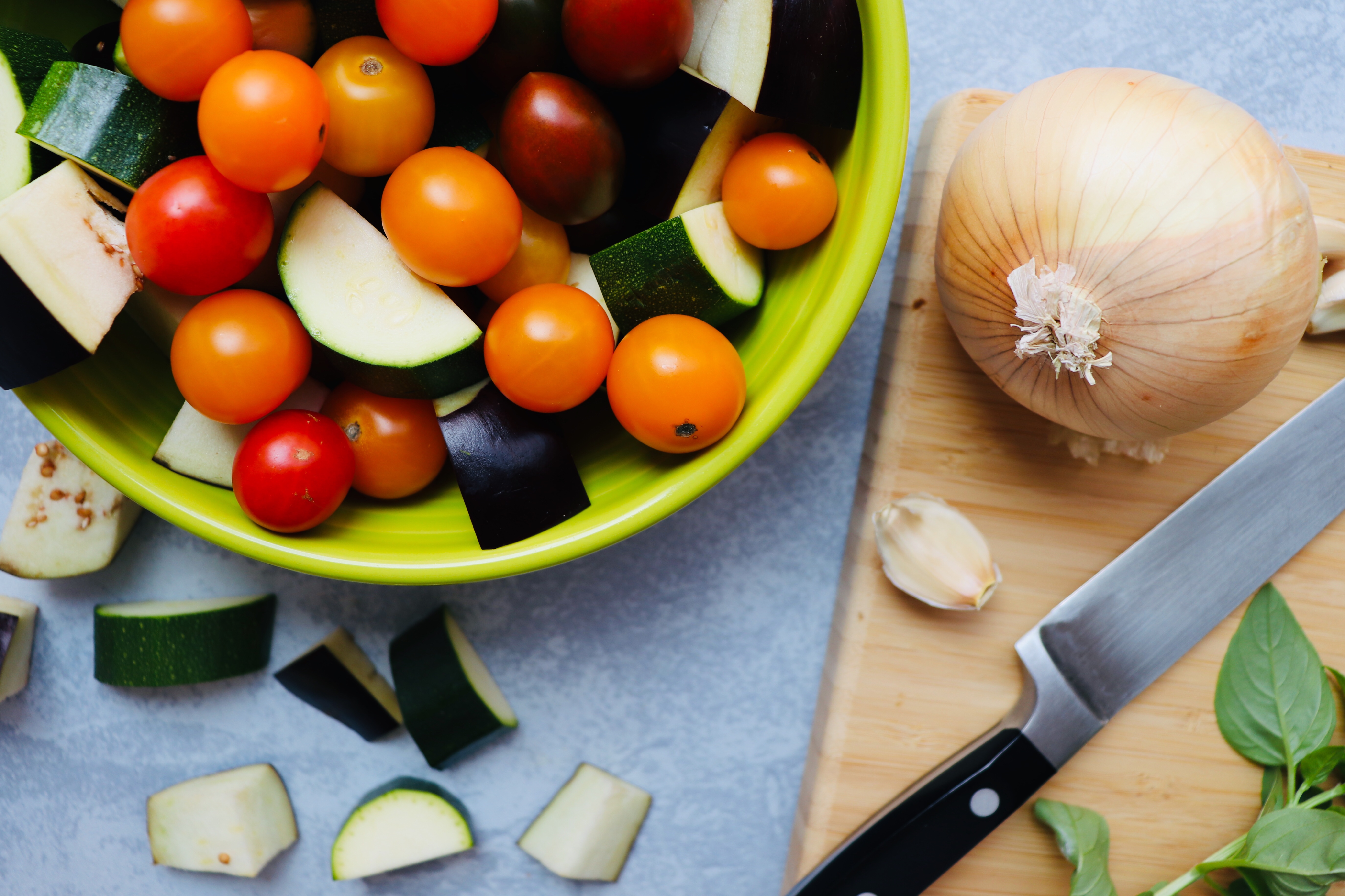
Once-a-week food prep—pre-chopping or cooking lots of foods to combine throughout the week. This method has many of the strengths of batch cooking while making it easier to vary your meals. Still, I ran into the same problems: food-prep day was often intense enough to provoke crashes; if I couldn’t prep I had nothing to eat; and I wasted food.
30-minute meals from cookbooks. Most of the brain-work, from making the grocery list to integrating the steps for multiple dishes, is done. The ingredients are usually few and flavor-packed. The meals are likely to be tasty and (reasonably) nutritionally balanced.
I enjoyed this option most—even more than rolling food prep, just because the recipes were reliably good. Since I’m cooking for one, I could cook 3-4 times a week and have leftovers to freeze or mix around for variety or to keep in reserve for no-energy days.
30-minute meals, though, use time efficiently—not energy. Every one of those 30 minutes is jam-packed with activity, and that doesn’t include the time to get ingredients out, wash produce, and put things away. Factoring in my slow-moving mind and body, I needed at least 60 minutes to cook a 30-minute meal. It was exhausting, exacerbated my POTS, and pushed me out of my “energy envelope.”
Convenience foods like take-out, frozen pizza, or TV dinners, supplemented with salads or quickly prepared veggies. For zero-spoon days, this is certainly the easiest option—and far better than going without food! Even the healthiest convenience foods, though, are not nutritionally balanced. They often contain ingredients that don’t work with special diets, and they are expensive. I was priced out of this option. I do turn to these foods in a pinch, but not as a standard part of my diet.
5-ingredient “meals.” Simplicity is the best feature of these meals. They often rely on store-bought sauces or mixes for flavor, though, which pose the same problems as convenience foods. And no matter what they call themselves, they aren’t usually full meals, complete with protein, carbs, and three vegetables—when I tried them, I usually found myself preparing other dishes to round things out, which defeated the purpose.
Small-batch cooking—only chopping enough vegetables, etc., for one serving at a time. This lets a solo cook do smaller amounts of work per day, which can help with pacing. It can be a relief only to chop one carrot, or half an onion—I liked that, when cooking my vegetable-heavy meals. The inefficiency of getting out the same bag of carrots EVERY DAY to prepare one carrot, though, drove me up the wall and cost me more energy overall. This method also creates no leftovers to have on hand for no-energy days.
Meal Kit Services. These services deliver all the pre-chopped and measured ingredients for several meals to your door. All you have to do is open the packaging and follow the cooking directions. Nutritious, “foodie-friendly” options are available for many special diets.
I have not tried these kits, but friends have found that just opening the packaging (and then recycling it when done) challenged their energy; the meals also still took them at least 30 minutes of active time. In addition, these services are not budget friendly for those with limited means.
Rolling Food Prep to the Rescue
Rolling food prep keeps many of the strengths of the above methods and solves many of the problems:
You can stay within your energy envelope, doing small amounts of work often rather than huge amounts at once.
You always have a range of prepared ingredients on hand, even on no-energy days.
You get plenty of variety.
Frequent food prep minimizes waste.
All ingredients are known to you and can be safe for your diet.
Meals are budget-friendly.
This has been the most sustainable method I have found so far—the best combination of gentle on the body, affordable, and satisfying to eat, while still making provision for no-energy days.
Every day: three meals. An endless round of shopping, chopping, cooking, cleaning. But also—an endless round of color, fragrance, flavor, fullness.
Preparing your own meals can be both pleasure and hardship, but sometimes hardship takes over. Cooking can be a challenge even for the healthy. If you live with an energy-limiting condition—chronic illness, chronic pain, injury, age, or even pregnancy—feeding yourself three times a day can seem like an insurmountable hurdle. It is one of the most relentless challenges many of us face, yet managing our conditions well demands nourishing our bodies well.
In this blog I share the strategies I’ve found most effective during my 20+ year illness journey for preparing nutritious, tasty, varied meals that don’t break the energy bank. They aren’t no-effort strategies, I’m afraid. No magical solution makes self-care a snap. But they let me pace myself so that I can eat well and enjoy the pleasures of the table without getting (too) beaten up in the process.
These are my mainstays:
Do a “rolling” food prep: prepare extras of one or two ingredients each time you cook for use in future meals.
Let time (slow, hands-off methods of cooking) or money (e.g., buying pre-chopped vegetables) compensate for minimal energy.
Go off-recipe when possible. This makes pacing easier, as you can respond more intuitively to your body’s need for rest.
Learn good flavor combinations that go well together no matter how they’re prepared. You can choose the cooking method based on your energy level.
Give foundational ingredients (rice, beans, meat) good flavor. That lets you make simple meals from leftovers that still have layered flavors.
Play to your energy strengths (meal-planning, chopping, standing) when you have them. It helps to avoid cooking all of dinner at dinner-time.
Do small, fussy tasks in advance to minimize the mental effort of juggling multiple steps.
Maintain good infrastructure: sharp knives, curated spices and tools, accessible utensils, etc. This is basic, but it takes discipline!
Plan plenty of extra time so that you can take rest breaks as needed. Again, basic but hard to do.
You can find a fuller version of the list with examples in the menu bar, and of course, I’ll explore them in more detail in future posts. Because these are strategies and not recipes, they work well for different diets, whether Mediterranean, ketogenic, gluten-free, or vegetarian.
If you are new to this adventure of cooking with an energy-limiting condition, I hope even this bare-bones list will ease your way. If you’re an old pro, I hope you can still find something useful here—and that you’ll share your own strategies in the comments. I would love for this site to become a generous community of cooks and eaters.
 One Spoon Cooking