Zero Spoon Meals for Long Days

You know this scenario:

Your day runs unexpectedly long, your symptoms are flaring and you are wading through the Slog. You’ve long since used every spoon you have and then some. You need food but don’t have the oomph or willpower to prepare anything healthful. What do you do?

Do you follow the path of least resistance and gorge on calorie-dense, nutrition-poor snack foods? Buckle down to force your body past capacity to make that healthful food? Order take-out, even though it’s not really in your budget or helpful for your symptoms?

None of these options deserves moral judgment: in no-win situations, we have no good calls to make. But realistically, all these choices are liable to drive you further into energy debt and keep a vicious cycle going.

Zero spoon days happen. They are less likely to be no-win food days, though, if we face that truth squarely when we do have energy and prepare for them in advance.
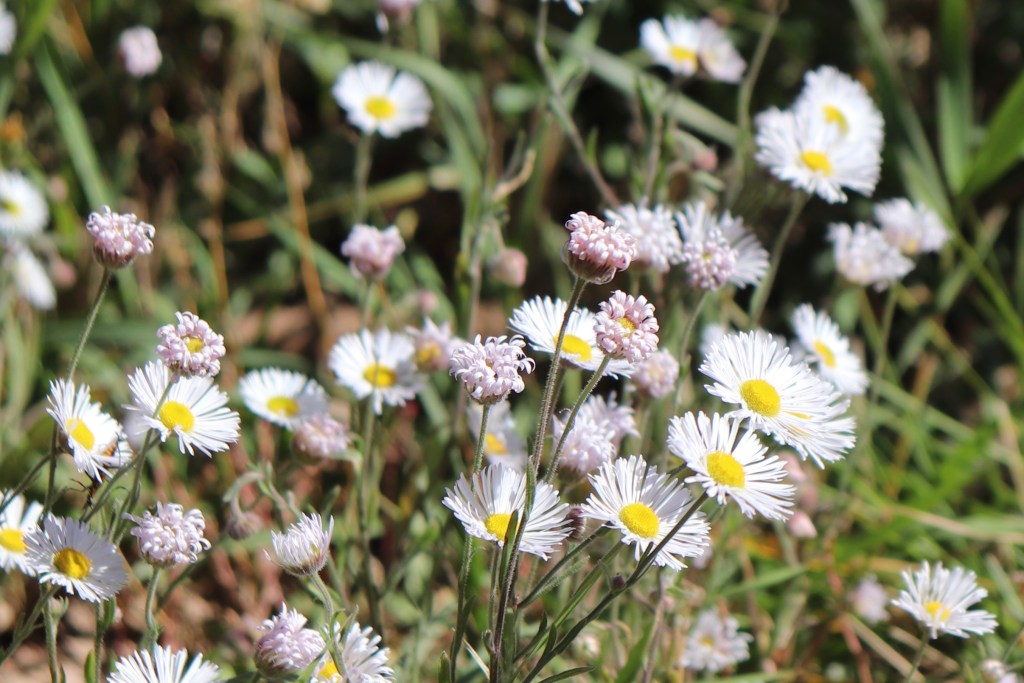
Image shows a close-up of white to pale lavender fleabane flowers. Some of them are past the first flush of bloom, and all their petals are curled back tightly. They are still lovely with deeper color and perfect symmetry, rocking their zero-spoon days.

We have created a new category on One Spoon Cooking for zero-spoon options. This first Zero-Spoon post features one of my vanlife favorites. It illustrates the kind of advance thinking and preparation I encourage—not daunting or complicated to prepare, easily adapted, easy to cook in a couple of ways. Alas, I would probably (wrongly!) have sneered at it while in my house, because I would (wrongly!) have associated it with bad backpacking food:

Thermos soup made with boiling water and dehydrated veggies and beans.

Oh, tell me you’re not sneering. Thermoses and dried veggies are great additions to your low-spoon toolkit.
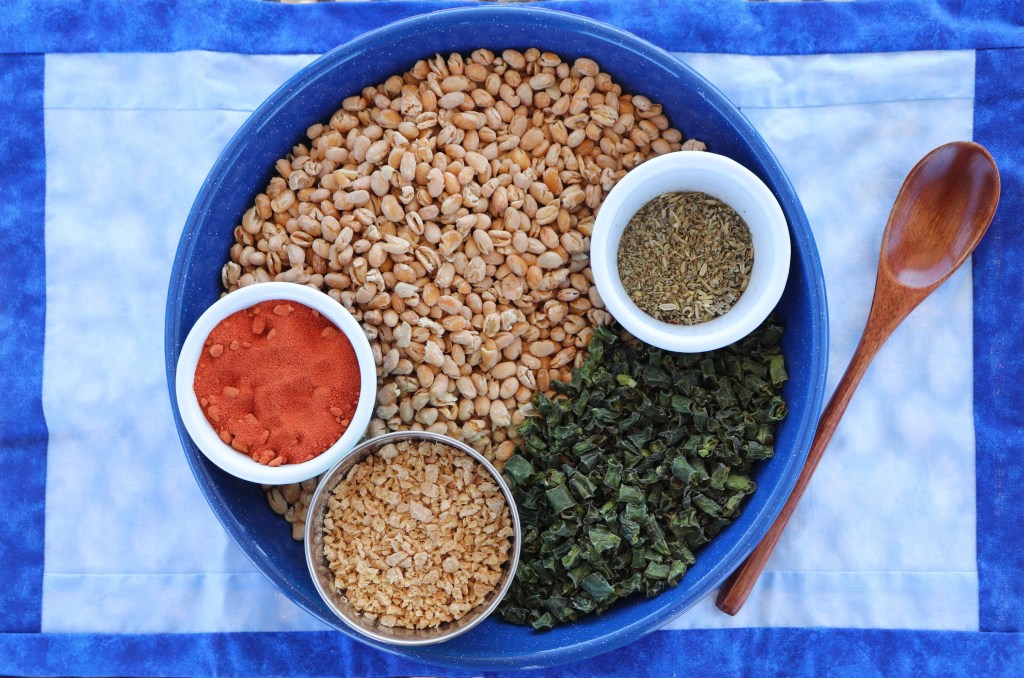
Photo shows a deep-dish blue plate on a matching blue placemat. Artfully arranged on the dish (::cough:)) are soup mix ingredients: navy and green beans, tomato powder, soy curls, and dried herbs and spices. To the side is one smallish wooden spoon, which is all the energy the assembly demands.

Advance planning: On a day when I have about half a spoon of spare energy (5 minutes to gather/put away ingredients, and 5 minutes to mix them), I make 6 servings of dry soup mix, with parboiled, dehydrated navy beans, dehydrated vegetables, and seasonings.

Zero spoon days: On a day I know will be exhausting, like my weekly travel and chore days, I add a serving of soup mix, olive oil, and boiling water to a thermos in the morning (zero spoons). On unexpected no-energy days I do the same at some point when I’m already up and about so I don’t waste energy making a special trip to the kitchen. At dinner time, when I most need some nutritious, hearty, comfort food, I have a delicious meal all ready to go (zero spoons).*

That is six zero-spoon meals, my friends, for half a spoon’s worth of energy in advance. That is a lot of flavor and nutrition bang for the effort buck. 

I wish I had even thought of the humble thermos when I was still working or had my house. Thermoses are portable—I could have eaten a hot (or cold) meal between exhausting errands or doctor’s appointments. They are lightweight—I would not have had to lug the slow-cooker around my kitchen. Their vacuum-sealed, not-quite-boiling, slow-cooking environment concentrates flavors, which means more taste for less effort. My thermos is small enough to open without hurting my hands on higher pain days.

And dehydrated veggies—well. They will get their own post, because they have been game changers for me. But for now, suffice it to say that they have 90% of the nutrition of their fresh counterparts with no chopping. As long as you don’t expect any preserved food to act or taste like fresh (do you expect vodka to taste like a potato??), you can play to their strengths, and zero-spoon soup mixes are one of dehydrated veggies’ very great strengths.
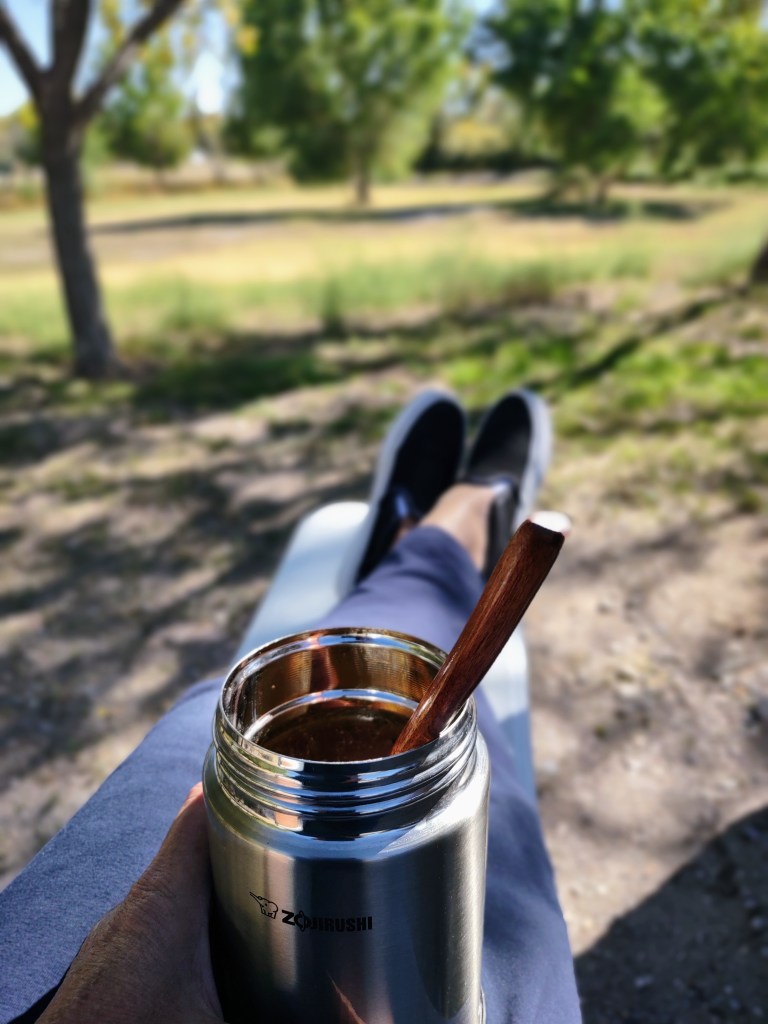
I’ve been told that proper food blogs feature photos of the plated dish, so here ya go: Image shows a hand holding a shiny, silver thermos with a spoon sticking out of it at a jaunty angle. The diner’s feet are elevated on a bench outdoors. (Could she possibly have POTS??) In the sunlit background, cottonwoods along the southern Rio Grande are just barely tinged with autumn gold.

I’ll share the recipe below as an example of proportions. So many of us have food sensitivities or special diets that recipes aren’t always much use among us. If the idea makes sense in your life, though, the recipe is here as a helpful framework for you to build on.

Tl;dr takeaways:

  • Prepare ahead for inevitable zero-spoon days.
  • Thermoses are lightweight, portable ways to cook hot zero-spoon foods.
  • Dehydrated veggies make great zero-spoon soups.

What about you? What is one simple, low-effort thing you can do this week to set yourself up for a nutritional win on your next zero-spoon day? How might you make it a habit?

__________________

*At dinner time I could also just put the soup mix, oil, and water in a pot on the stove for 15 minutes. Physically that would still be zero spoons, but it would cost a mental spoon because I’d have to find the gumption to take action.

Zero Spoon Day Navy Bean Soup

(Note of caution: I never actually measure anything, so these are all estimates. But they’re close enough to give you the idea.)

Per serving:

1/4 C parboiled, dehydrated navy beans

1 T unflavored soy curls/TVP flakes

1 heaping T dehydrated green beans

1 scant T dehydrated spinach

1 heaping tsp. tomato powder

½ tsp. Italian seasoning or to taste

½ tsp. fennel seed

¼ tsp. black pepper

Salt to taste

Put everything together in a zip-lock bag and shake to mix. Sometimes I also add 1 T dry packed, julienne sliced sun-dried tomatoes per serving.

To prepare: Add ingredients to a 16-oz. vacuum-seal food jar with about 1 T olive oil and boiling water to fill the jar. I usually add garlic powder and sometimes chives just prior to serving, as thermos lids absorb garlic and onion odors too, too well. Cost: roughly $2.50-3.00 per serving.
We Resume Our Irregularly Scheduled Programming

Why did I abandon this blog so soon after starting it? It didn’t happen consciously. It just presented challenges I struggled to resolve, and I followed the path of least resistance.

Here were the challenges:

  • The physical drain of taking quality photos was far greater than I expected. I could prepare a meal, or I could photograph it, but not both. Yet I felt photos were important. They convey a vital message that food can be the stuff of sensory delight. I was afraid the message of long blocks of text without photos would be “Food is all work with no play.” If you’re here, you may be hungry for the reminder that cooking can be beautiful.
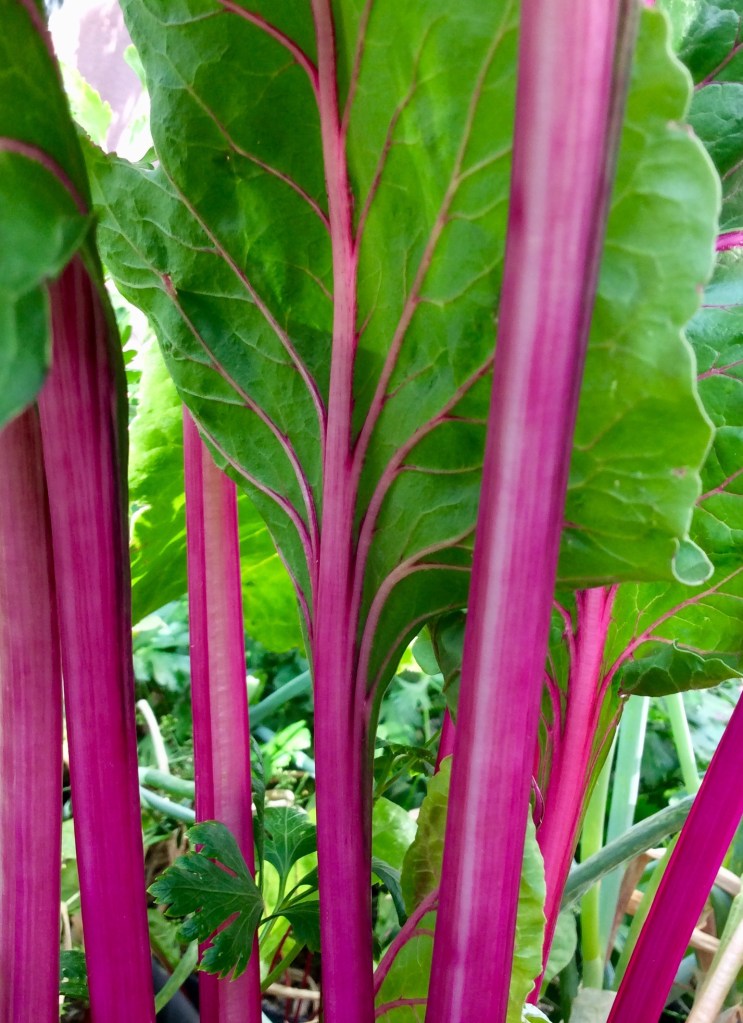
Image shows the vivid pink stems and spring green leaves of “Flamingo” chard growing in containers in my former garden.
  • My natural style of writing is daydreamy and explorational. It has metaphors and stuff. I don’t do nuts and bolts well or with pleasure. But I also have cognitive difficulties and recognize that for many of us, nuts and bolts are all the the bandwidth we can spare for reading—especially if we need practical strategies for preparing tonight’s dinner.
  • I felt like the overall list of strategies had said everything I had to say, and that anything further was belaboring the point.
  • After years of being mostly housebound, I was losing my love for life. So a couple of years ago, I moved into a camper van conversion so I could move my house around (which is not something I recommend for everyone!) and fell in love with life again. But my awesome strategies became irrelevant. I have no oven, fridge (let alone freezer), or microwave—my mainstays. I have been learning how to cook in low-spoon ways in a whole other kind of kitchen, and I have been unsure whether any of my new finds would work for others.
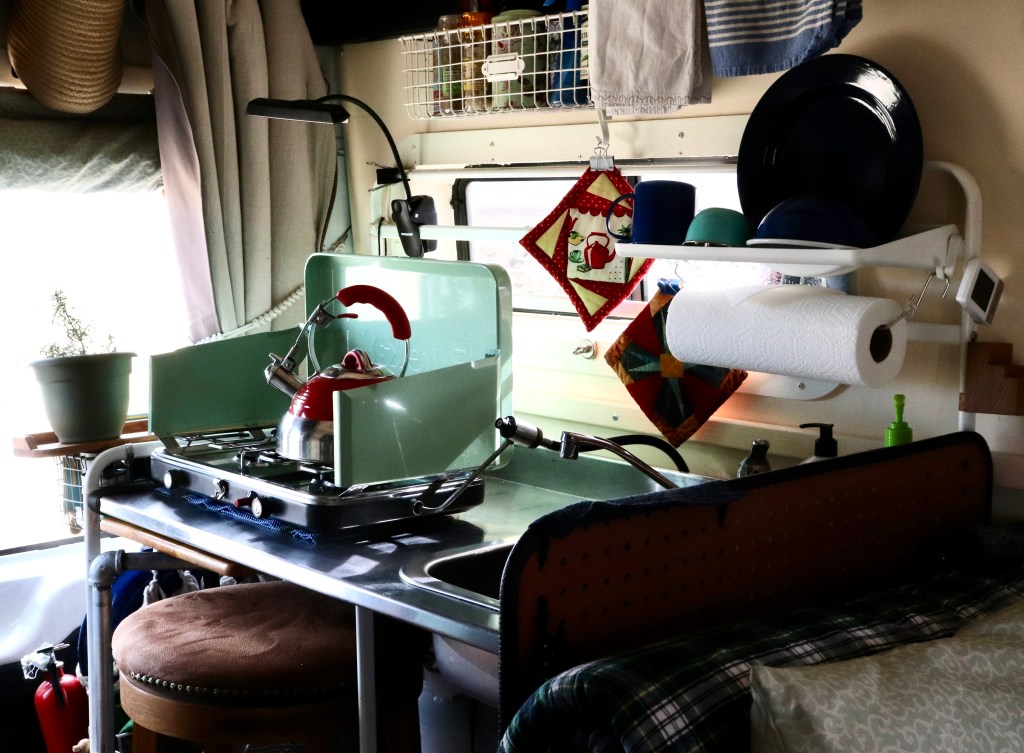
Image shows my kitchen—a sink, camp stove with cheery red kettle, some shelving, and glory be, a knee-hole so I can actually sit to cook on a cushy swivel bar stool.

Then one of my dearest friends developed chronic pain and autoimmune illnesses. Her lifestyle and conditions (let alone her digestion) could not be more different than mine. Yet her need for nourishment is the same. We began talking about cooking and the lack of resources for people with chronic pain and illness. Not diet resources—this community is awash with specialty diet protocols—or recipe books but strategic ones: how to use your energy to its best advantage to nourish yourself Every. Single. Day. This blog has, we hope, the potential to be a much-needed resource.

Michele will occasionally become a voice here, talking about her much different needs, struggles, and insights. One Spoon Cooking will change in other ways, too. I will include photos of beautiful places I’ve had the pleasure of resting in (because going to beautiful places and lying down in them is how I do #vanlife), with the occasional snapshot of pretty ingredients if it’s not too much work. Strategic posts will be organized in an easily accessed Nuts and Bolts section. Some posts will be about searches for solutions, because as life changes new ones need to be found. Some will be about attitudes toward food and how they are currently shaping our quality of life. We’ll do some book reviews as they seem helpful. I’ll explore strategies I’ve discovered since being in the van that I wish I’d known about in my house.

Image shows a duck hopscotching across Antero Reservoir in Colorado in preparation for takeoff. Mist rises from the water below the snowy peaks of the Sawatch Range. View from my window, September, 2023.

If there’s something you’re missing, some strategy you crave, please tell us in the comments. We will pool our resources and see if we can help. Our aim is to put our experience to work for us all, but especially those who may be new to diagnosis and overwhelmed, or whose illnesses have suddenly changed direction.

If you are reading this after all these years, I thank you. I’ve learned that we have never said all we can about food. Our need for it never ends, and our need for inspiration and connection around it never ends. So in a toast to inspiration and connection, I raise my virtual spoon to yours. Let’s get cooking.

Managing Holiday Meals: Upsizing

Every Thanksgiving I plan a “simple” holiday meal only to crash halfway through cooking it, because it wasn’t quite simple enough.

I’m tempted to skip the celebration, but holidays matter, just like good meals matter, even to solo cooks, the housebound, the ill. They remind us what we value; they allow us to share in our culture’s observances; they give us a chance to enjoy beautiful, once-a-year rituals.

But they’re a heck of a lot of work.

I normally downsize holidays: take the full, overwhelming shebang and reduce it to what I hope will be a manageable level with simpler recipes, fewer dishes, and more storebought items. But really, downsizing has never quite worked. Whatever I do is still more than I would typically do in a day–just washing the dishes, let alone cooking the meal. I end up overly tired and wondering whether next year I’ll even bother.

Downsizing also has negative undertones. You downsize by subtracting from something larger, and that can make me feel a little deprived–like what I’m doing is “less than” or second best, not what I would do if I were healthy. It can foreground the losses of illness.

This year I’m going to experiment with upsizing instead. I will add just one thing to my regular fare to give my meals the flavor of holiday. For 2019 that one thing will be cranberry sauce. (In fact, I’m not really doing any extra cooking–in my normal menu rotation, Wednesday is already sauce-making day.)

I might make a traditional sauce, or this Cuban-influenced one with cocoa, orange, and lime; or a family-favorite “salsa” with dried cranberries, orange, pecans, and red chile powder. They are all good on everything from oatmeal to sandwiches to baked apples. I might just eat cranberry sauce at all three meals, because if I’m going to do such a simple thing, I can go over the top with it.

That’s the thing about upsizing, about addition: you feel like you’re going over the top. Upsizing focuses on gain rather than loss, on the plenty you have rather than what you are missing, on abundance rather than scarcity. What you do is “more than;” it is extra, bonus, gratuitous.

And that sense of gift, of gratuity, is a first big step toward gratitude.